What is GEO and AEO?
The Short Answer
GEO and AEO are just SEO strategies adapted to how search works now, especially in AI-driven and zero-click environments.
If your SEO fundamentals are strong, you’re already doing it. Helpful content, solid structure, and authority are what get you surfaced and cited.
Don’t get distracted by buzzwords. You don’t need an additional service, focus on solid execution of the SEO basics.
Table of Contents
If you’ve spent even five minutes in the marketing world lately, you’ve probably seen the terms GEO (Generative Engine Optimisation) and AEO (AI Engine Optimisation) everywhere.
And if you’re like most business owners, your first thought was probably: “Wait… is this something else I now need to pay for?”
Short answer: no.
Longer answer: GEO and AEO are not new disciplines. They’re simply a reframing of what good SEO has always been, adapted to how search behaviour is evolving.
Let’s break it down properly.
What Are GEO and AEO?
GEO and AEO refer to optimising your content so it appears in AI-driven search environments.
That includes:
AI Overviews in Google
Chat-based search tools (like ChatGPT)
Voice search and conversational queries
AI-generated answers that summarise multiple sources
Instead of just ranking on a search results page, your goal is now to be selected and cited by AI systems. This is the emerging shift of SEO.
But here’s the important part: the way you get there hasn’t actually changed.
The Biggest Misconception
A lot of agencies are positioning GEO and AEO as entirely new services.
And yes, search is changing. We’re moving into a zero-click environment where:
Users get answers without clicking through
CTRs are dropping, especially for informational queries
AI summaries are doing the filtering for users
That part is real. But what’s not real is the idea that you need to rebuild your entire marketing strategy from scratch.
Because if your SEO foundations are strong, you’re already doing GEO and AEO.
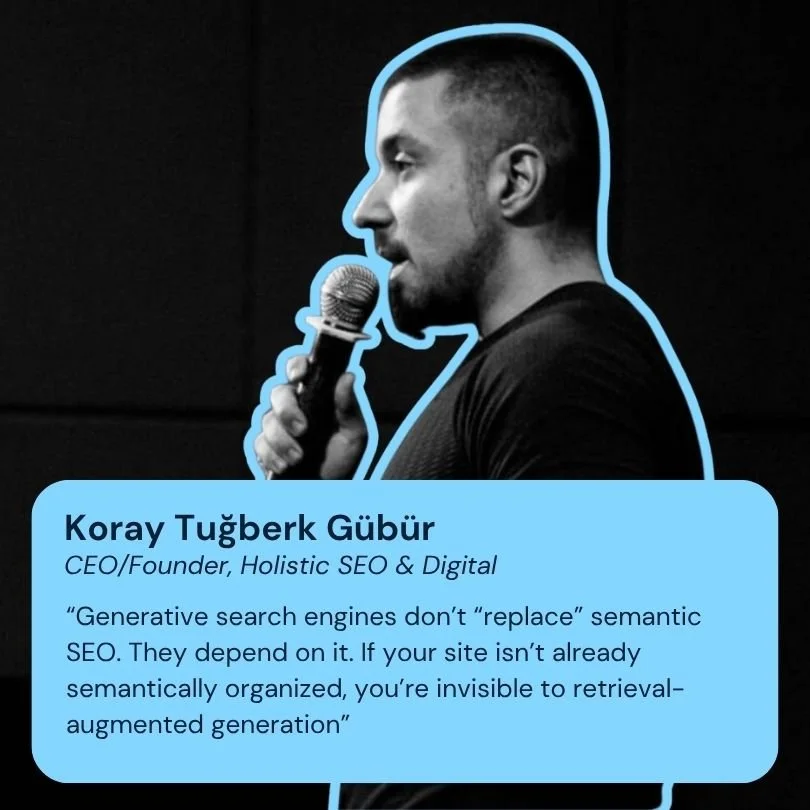
And this isn’t just our opinion. As Koray Tuğberk Gübür, one of the leading voices in semantic SEO, has said, anyone claiming GEO is fundamentally different from SEO is likely chasing hype.
His work in semantic search, entity relationships, and knowledge graphs has been shaping how search engines understand content for years. Long before AI-generated answers became mainstream.
So when he says GEO isn’t something new, it’s worth listening to.
SEO, GEO & AEO All Share the Same Backbone
At their core, all three rely on the same fundamentals:
1. High-quality, helpful content
Content that actually answers real questions. Not fluff. Not keyword stuffing. Clear, useful, and written with expertise.
2. Strong technical SEO
Fast load times, clean site structure, proper indexing, and no broken foundations.
3. Logical internal linking
Helping both users and search engines understand how your content connects.
4. Relevant backlinks and authority
Being referenced by credible sources in your space.
If you’re doing these four things well, you’re already aligning with how AI engines choose what to surface.
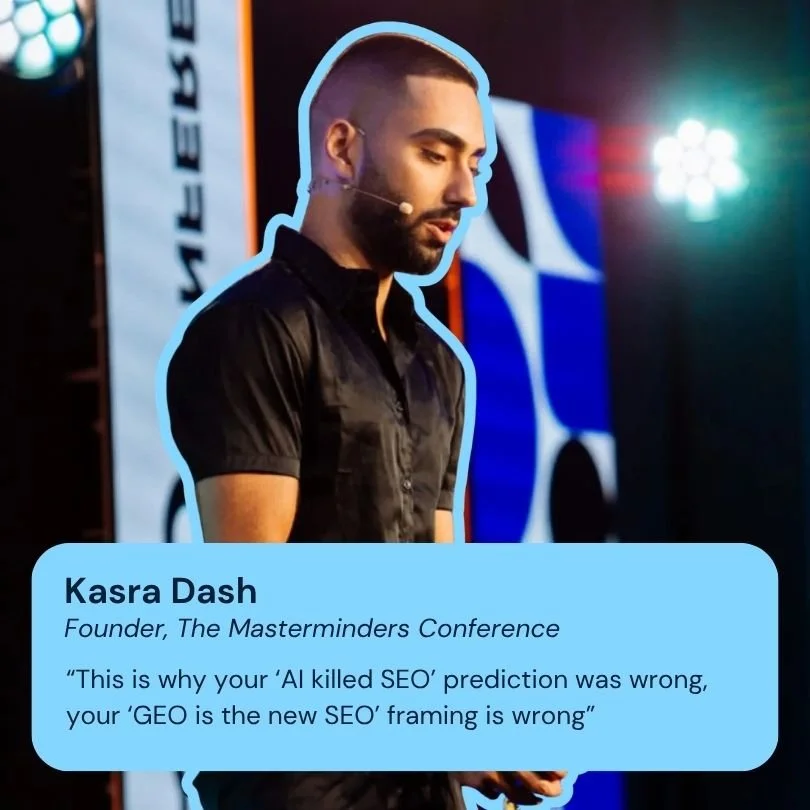
There is no secret “AI hack” layered on top. Even operators deep in the space are pushing back on the hype. Kasra Dash, founder of The Masterminders, has publicly called out the idea that “GEO is the new SEO” as the wrong framing. The fundamentals haven’t changed, but the way search delivers results has.
So What Has Changed?
The fundamentals are the same. The application has evolved. Search behaviour is now more conversational and intent-driven. People are searching like this:
“What’s the best CRM for small teams in Australia?”
“How long does SEO take to work?”
“What should I include in a marketing strategy?”
Not just:
“CRM Australia”
“SEO timeline”
This means your content needs to:
Cover question-led topics
Match real user intent, not just keywords
Be structured clearly so AI can extract answers easily
It’s less about ranking for a single keyword and more about being the best answer to a specific question.
What Good “AI-Ready” SEO Actually Looks Like
If you want to align your strategy with GEO and AEO, here’s what that looks like in practice:
You prioritise depth over volume
Fewer, better pieces of content that fully cover a topic.
You write like a human, not a search engine
Clear, conversational, and helpful. No over-optimisation.
You structure content for clarity
Headings, FAQs, and clean formatting that make it easy to scan and extract.
You build topical authority
Not just one blog, but clusters of content around key themes.
You answer real questions
Using insights from clients, sales calls, and actual conversations.
That’s it. No new channel. No separate “AI strategy” document. You may already be doing this well!
Why the Industry Is Making It Sound Bigger Than It Is
There’s a reason GEO and AEO are being pushed so hard right now. Uncertainty is easy to sell to.
I mean, don’t get it twisted. Search is changing, that part is real. As Bethany Dive puts it:
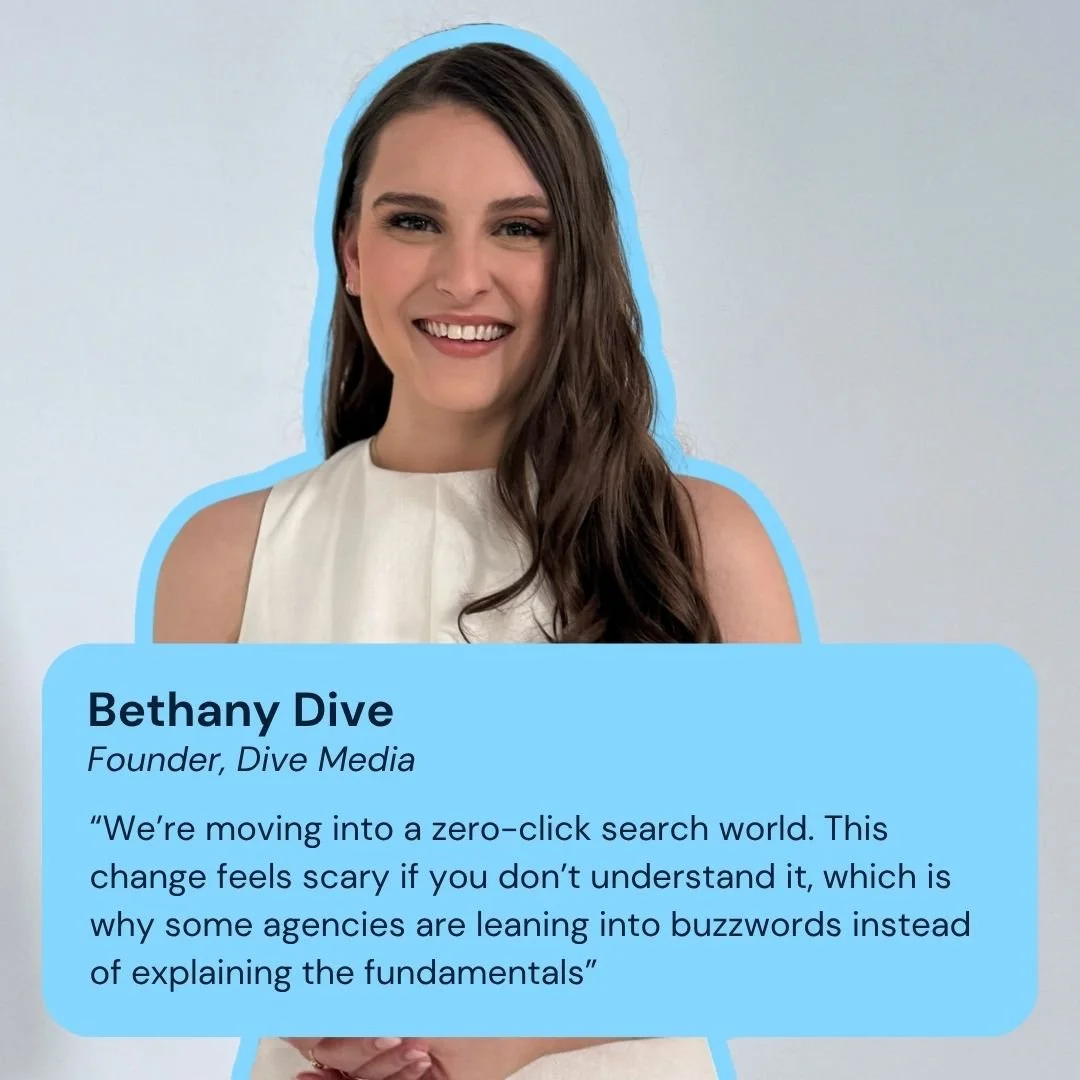
“We’re moving into a zero-click world, CTRs are dropping, and AI Overviews answer questions before users even leave Google. This change feels scary if you don’t understand it, which is why some agencies are leaning into buzzwords instead of explaining the fundamentals.”
When something feels new and technical, it’s easy to position it as complex and urgent. That creates demand for “specialised” services.
But in reality, most businesses just have an SEO fundamentals problem.
Thin content
No clear structure
Weak internal linking
No authority or depth
Fixing those will do more for your visibility, in both Google and AI tools, than chasing the latest acronym.
FAQs About GEO, AEO & SEO
-
There isn’t a major difference in fundamentals.
SEO focuses on improving your visibility in traditional search engines like Google. GEO and AEO focus on being surfaced in AI-driven results, like AI Overviews or chat-based tools.
The key point: they all rely on the same foundations. High-quality content, strong technical SEO, and clear site structure. GEO and AEO are simply SEO adapted to newer search environments.
-
No.
Most businesses do not need a completely separate strategy. If your SEO is done properly, you are already aligning with GEO and AEO.
Instead of creating something new, the focus should be on improving your existing SEO:
Better content depth
More question-led topics
Stronger internal linking
Clear structure and formatting
That’s what helps you appear in AI-driven results.
-
Zero-click search is when users get their answer directly on the search results page without clicking through to a website.
This happens through:
AI Overviews
Featured snippets
Knowledge panels
It means fewer clicks, but not less importance. Your goal shifts from just driving traffic to also being visible and cited in those answers.
-
You optimise for AI search the same way you optimise for good SEO.
Focus on:
Answering real user questions clearly
Using natural, conversational language
Structuring content with headings and FAQs
Providing depth and context, not just surface-level info
AI tools prioritise content that is easy to understand, well-structured, and genuinely helpful.
-
Yes, but how you use them has evolved.
It’s less about exact-match keywords and more about:
Search intent
Topic coverage
Natural language
Instead of forcing keywords into content, focus on answering the full topic. Keywords should still guide your strategy, but not dominate your writing.
-
Because it feels new, and new things create urgency.
Search is changing, which is true. But many agencies are using GEO and AEO as buzzwords to sell additional services.
In most cases, the issue isn’t that businesses need a new strategy. It’s that their existing SEO isn’t strong enough yet.
-
Typically, you’ll start seeing meaningful results within 3 to 6 months, depending on your industry and competition.
For AI visibility, this can sometimes happen faster if your content is:
Highly relevant
Well-structured
Answering a clear question
But long-term consistency is what drives sustainable results across both traditional and AI search.
-
If you’re feeling overwhelmed, keep it simple.
Focus on:
Creating genuinely helpful content
Covering real customer questions
Improving your website structure
Building authority in your niche
If you get these right, you won’t need to chase every new acronym that comes along.
The Bottom Line
GEO and AEO are when good SEO meets modern search behaviour.
If your content is genuinely helpful, your site is technically sound, and your strategy is built around real user questions, you’re already on the right track.
So don’t overcomplicate it!
Focus on the fundamentals.
Adapt to how people search today.
And build a strategy that actually helps your audience.
If all of this still feels a bit overwhelming, you don’t have to figure it out alone.
At Dive Media, this is exactly what we do. We cut through the noise, focus on what actually drives results, and build SEO strategies that work in today’s search landscape.
If you want a clear plan, without the fluff, book in a free coffee chat with us. We can talk through your current setup, what’s working, what’s not, and where the real opportunities are. Just some practical advice to help you move forward.